Biennale of Contemporary Art - To pass from one dream to another
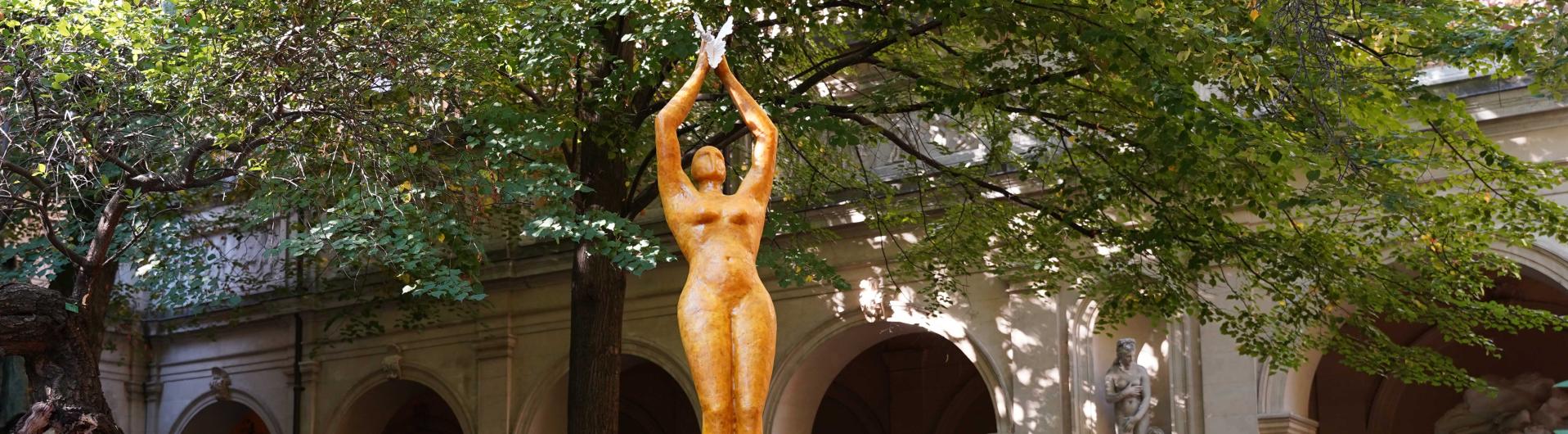
The garden of the musée des Beaux-Arts is located in the cloister of what was formerly the abbey of the Dames de Saint-Pierre. It was built in the 17th century and occupied by Benedictine nuns until the French Revolution (1789). The garden was redesigned several times during the 19th century, but today, among the flower beds and under the branches of the trees, it contains a variety of sculptures; there are copies of classical works and also masterpieces by Auguste Rodin and Antoine Bourdelle, as well as contemporary installations like Claudio Parmiggiani’s Terra, which is buried under a tree.
Showcased as part of the 18th Lyon Biennale, the pieces by Susan Philipsz, Luz Broto and Gideon Horvàth resonate with both the history and the sculptures of the garden.
The museum is open from wednesday to monday, from 10 am to 6 pm, and friday, from 10h30 am to 6 pm.
Closed Tuesday and national holidays.
Susan Philipsz
Susan Philipsz’s practice is closely attuned to space, each work conceived in dialogue with the specific context of its presentation. Sound is her primary medium, approached as a sculptural form that brings into relation the bodies of the viewer, architecture, and the layers of history that traverse them. Grounded in research, her work unfolds through sound compositions that combine music and song, voice, archival recordings and a play of repetition and silence. Attentive to themes of absence, loss, memory and hope, Philipsz mobilises sound for its emotional and psychological resonance.
To listen to in the garden:
We are weaving the shroud of the old world. For you already hear the storm raging.
From "Le Chant des Canuts" (The Song of the Silk Workers) 19th-century revolutionary song originating in the Lyon silk workers revolts of 1831, 1834, and 1848
I hear thunder, I hear thunder,
Hark don't you? Hark don't you?
Pit-a-patter raindrops, pit-a-patter raindrops,
I'm wet through, I'm wet through.
An adaptation of the famous traditional 19th-century French nursery rhytme Frère Jacques
Half a pound of tuppenny rice,
Half a pound of treacle,
That’s the way the money goes –
Pop! Goes the weasel.A penny for a spool of thread
Another for the needle,
That’s the way the money goes –
Pop! Goes the weasel.Up and down the City Road,
In and out The Eagle,
That’s the way the money goes –
Pop! Goes the weasel.All around the Mulberry bush,
The Monkey chased the people,
That’s the way the money goes –
Pop! Goes the weasel.
Variations of a traditional old English song set to music in 1852 by Eugène Germain Coulon
We are the Weavers,
And we are naked.
From "Le Chant des Canuts" (The Song of the Silk Workers)
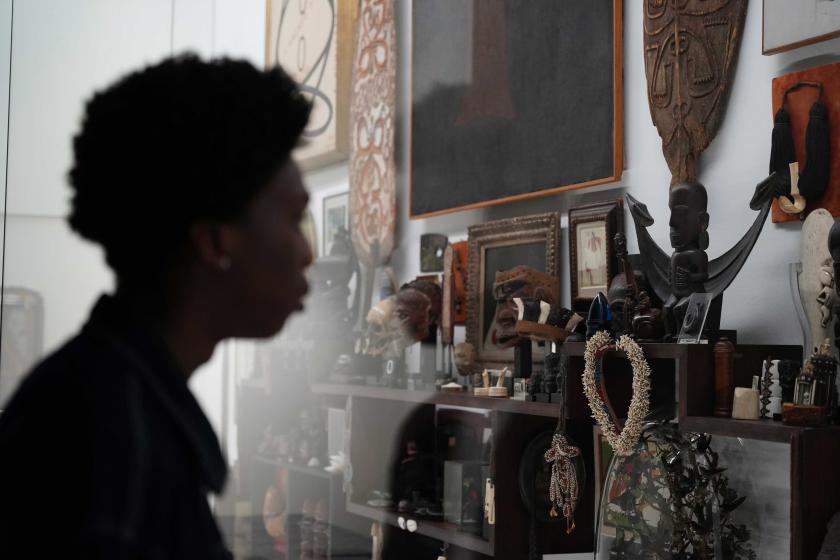
Portrait de Susan Philipsz au musée des Beaux-Arts de Lyon
Image © Lyon MBA - Photo Manon Ruffel
Luz Broto
Subtle shifts within social and spatial structures characterize Luz Broto’s site-specific interventions. Working within public space, she creates situations that invite individuals to exchange roles, routines, or positions, thereby revealing underlying systems of organization and control. Her practice is grounded in minimal gestures of perceptual displacements, questioning notions of access, responsibility, and collective behaviour while making the implicit rules governing everyday interactions visible.
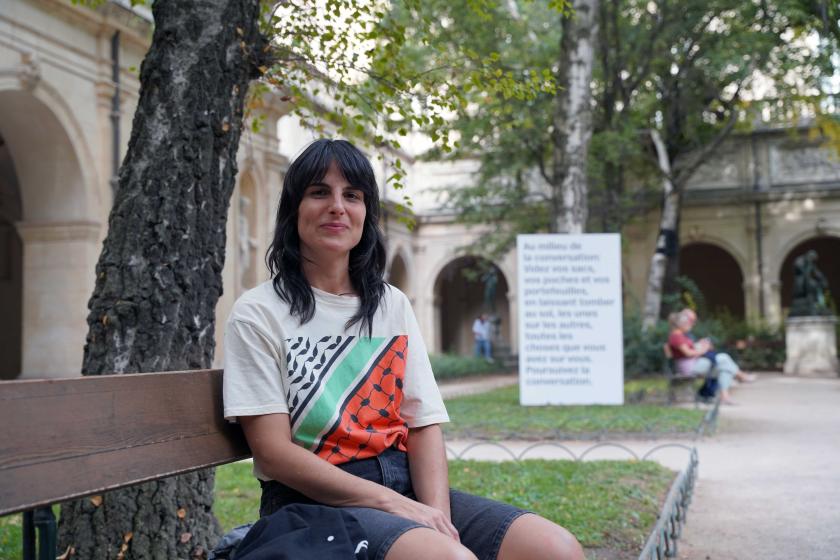
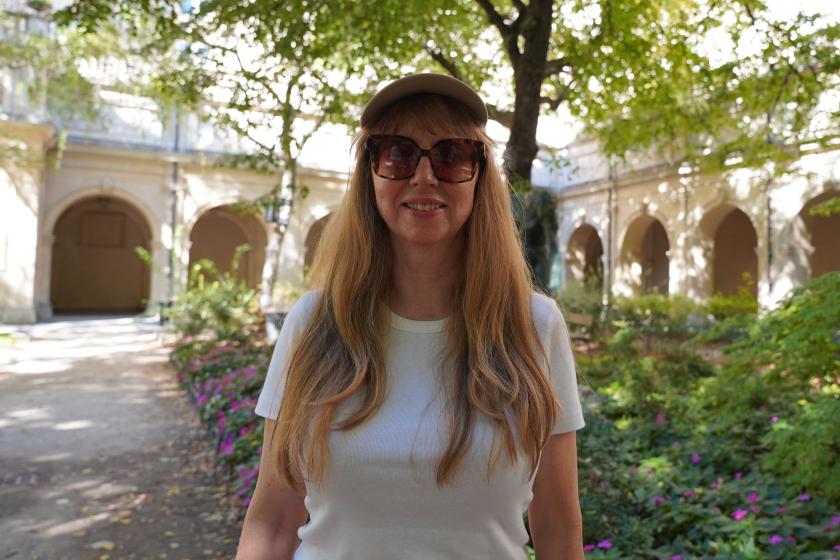
Portrait de Luz Broto dans le jardin du musée des Beaux-Arts de Lyon
Image © Lyon MBA - Photo Manon Ruffel
Gideon Horváth
Working primarily through installation and sculpture, Gideon Horváth develops a practice informed by queer theory and shaped by Greco-Roman mythology. Central to his work is the notion of vulnerability, understood as a collective force. The artist seeks to dismantle binary visions of the world—as the opposition between nature and culture—by challenging the dualistic and hierarchical structures that underpin them.
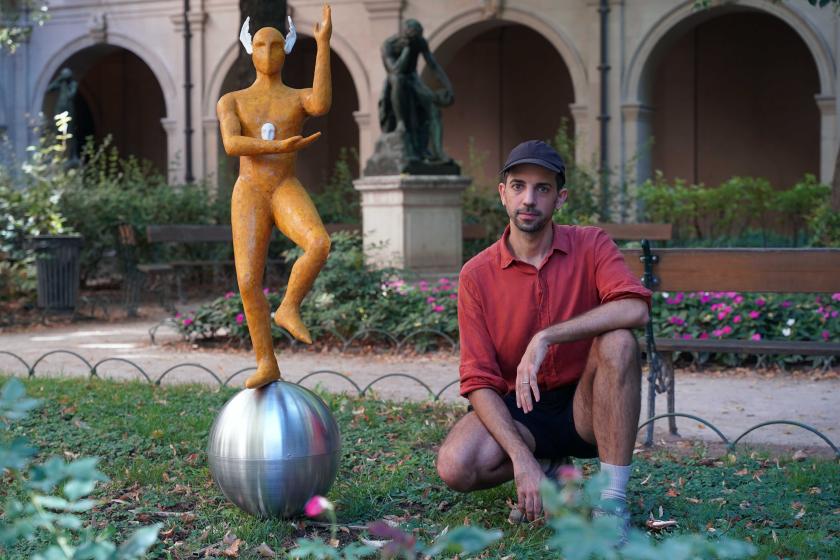
Portrait de l'artiste Gideon Horváth au musée des Beaux-Arts de Lyon
Image © Lyon MBA - Photo Antoine Guerrier